History of the Scottishmen McNab Clan: Macnab The Last Laird 1938 Book
- jericcawarren9
- Nov 20, 2025
- 3 min read

I came across an old book during a trip to Covington, Louisiana; a gem Lani Mcnab luckily owns. It is called "MacNab: The Last Laird" written by Roland Wild, published back in 1938. It’s a rare one, packed with stories about the origins of the MacNab clan. If you're unfamiliar, the MacNab family, now spelled McNab are one of the British families that made their way and still exists on the Bay Islands, more specifically of Scottish descent. The opening tale grabbed me instantly.
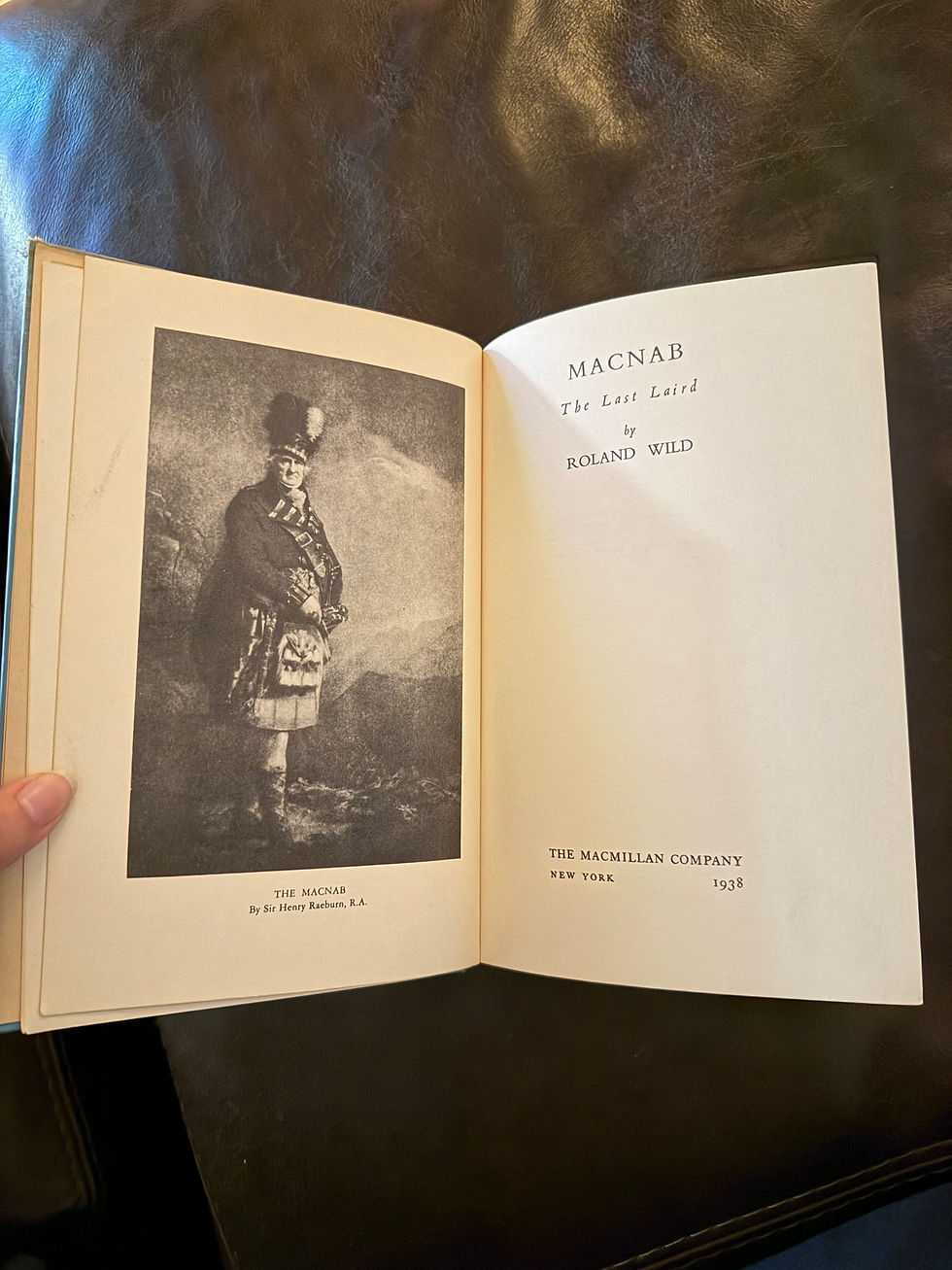
It begins in the year 1612, when Finlay, the VIII Chief of the MacNabs, was holed up in his ancestral home in the valley of the Dochart. The snow had fallen for seven days straight, blocking the roads from Perth. Food was running low, tempers were running high, and worst of all, the whiskey had run out. For a Highland laird, that was no small matter. His servants had gone to Perth three days earlier to fetch provisions for Christmas and New Year, but they hadn’t returned. Finlay, a towering man known for both his authority and impatience, sat brooding in his great hall, surrounded by his twelve sons, all said to be strong enough to drive a nail through a board with their fists. His second wife, a Campbell woman, resented those sons as her husband had a preference for his sons.
Then came a frantic pounding at the door. When Finlay opened it, a half-frozen servant collapsed inside, blood on his face and his clothes torn. Through gasps, he told the laird what had happened: the McNeishes, old rivals, had ambushed them on the road, stolen every drop of whiskey, and taken it to an island near Glentarken in the loch. Finlay’s face hardened. His twelve sons gathered silently around him, waiting. Then he said a phrase that would echo through the generations: “The nicht is the nicht, if the lads were the lads.” In other words, if his sons were true MacNabs, they’d know what to do.
That night, while the wind howled outside, the Campbell wife urged the eldest four brothers to take up the challenge. Some say she pushed them out of jealousy, believing they wouldn’t return alive. But they went anyway, cloaks on, dirks buckled, and courage fueled by a gulp of rough, home-brewed whiskey.
The McNeishes, meanwhile, were deep in celebration. They’d barricaded themselves on a tiny island in Loch Earn, drinking, singing, and mocking the MacNabs between toasts. They thought they were safe. Just before dawn, the four MacNab brothers reached the island. Iain, the eldest, shouted at the door: “Open the door, or we’ll set the place on fire!” From inside came a nervous voice: “Who’s there?”
“Who would ye least like to hear?” Iain answered.
“Smooth Iain MacNab,” the voice said.
“Then I am he,” Ian replied. “But 'tis rough I’ll be this night.”
What followed was brutal and swift. The brothers stormed the hall, their blades flashing in the torchlight. Eleven McNishes lay dead by the time the dirks fell silent. Only a child survived, found whimpering under a bed. When it was done, Iain raised the severed head of the McNeish chief, the same man who had drunk their stolen whiskey, and declared,
“A trophy for the Laird o' MacNab!” (their father).

Before dawn, they were back at the great house. Finlay was waiting. Without a word, the brothers laid the gory head at his feet.
"Na biodh fiamh oirbh!" said Iain. "Dread naught!".
The clan celebrated through the morning, not just for the whiskey, but for the revenge that had become legend. That bloody night gave the McNabs their crest: a severed head. To this day, tourists still notice it carved into stone and etched into glass, often without realizing the story behind it, a tale of snow, pride, and a Laird’s sons who proved that the lads were, indeed, the lads.


Comments