The Morley Diary Project from 1917
- jericcawarren9
- Nov 20, 2025
- 2 min read

In 1917, the world was at war, but not all soldiers carried rifles. Some carried notebooks.
Sylvanus Griswold Morley (1883–1948) was a Harvard-trained archaeologist, famous for decoding ancient Maya inscriptions. But during World War I, he had another job, one the public wouldn’t know about for decades. He was a spy for the U.S. Office of Naval Intelligence.

Morley’s official cover was his work for the Carnegie Institution of Washington, mapping Maya ruins. His real mission: travel the coasts of Central America, record shipping movements, scout for German submarine bases, and quietly keep tabs on German nationals.
It was this double life that brought him to the Bay Islands of Honduras in December 1917.
Morley’s journey took him east along the island to Oak Ridge, a remote fishing settlement in those days. His diary entry paints the scene:
“A most picturesque little place, a sort of Venice in miniature.”
Oak Ridge wasn’t connected by roads “accessible only by water,” as he noted. Narrow waterways cut through clusters of wooden houses on stilts, and dugout canoes moved along channels like street traffic. Hills thick with coconut palms rose behind the town, while mangroves wrapped the shoreline.
He observed the people “almost entirely English-speaking,” descendants of Caymanian settlers, and their livelihoods: fishing, coconut harvesting, and small-scale trade. But Morley was also sizing up the harbor. He recorded that it could “accommodate vessels of considerable draft,” a small detail to most, but crucial to someone tasked with assessing potential anchorages for wartime use.
Morley didn’t just take notes on geography. He went to local gatherings, attending a dance in Roatan where the music was provided by “a fiddle and an accordion” and the crowd was “good-natured and orderly.”
He noticed the bright cotton dresses of the women, the pressed shirts of the men, and the English-based dialect that set the islanders apart from Spanish-speaking mainlanders. His descriptions offer a rare glimpse of Roatan society before tourism, when the islands were more connected to Caribbean trade than to Tegucigalpa.
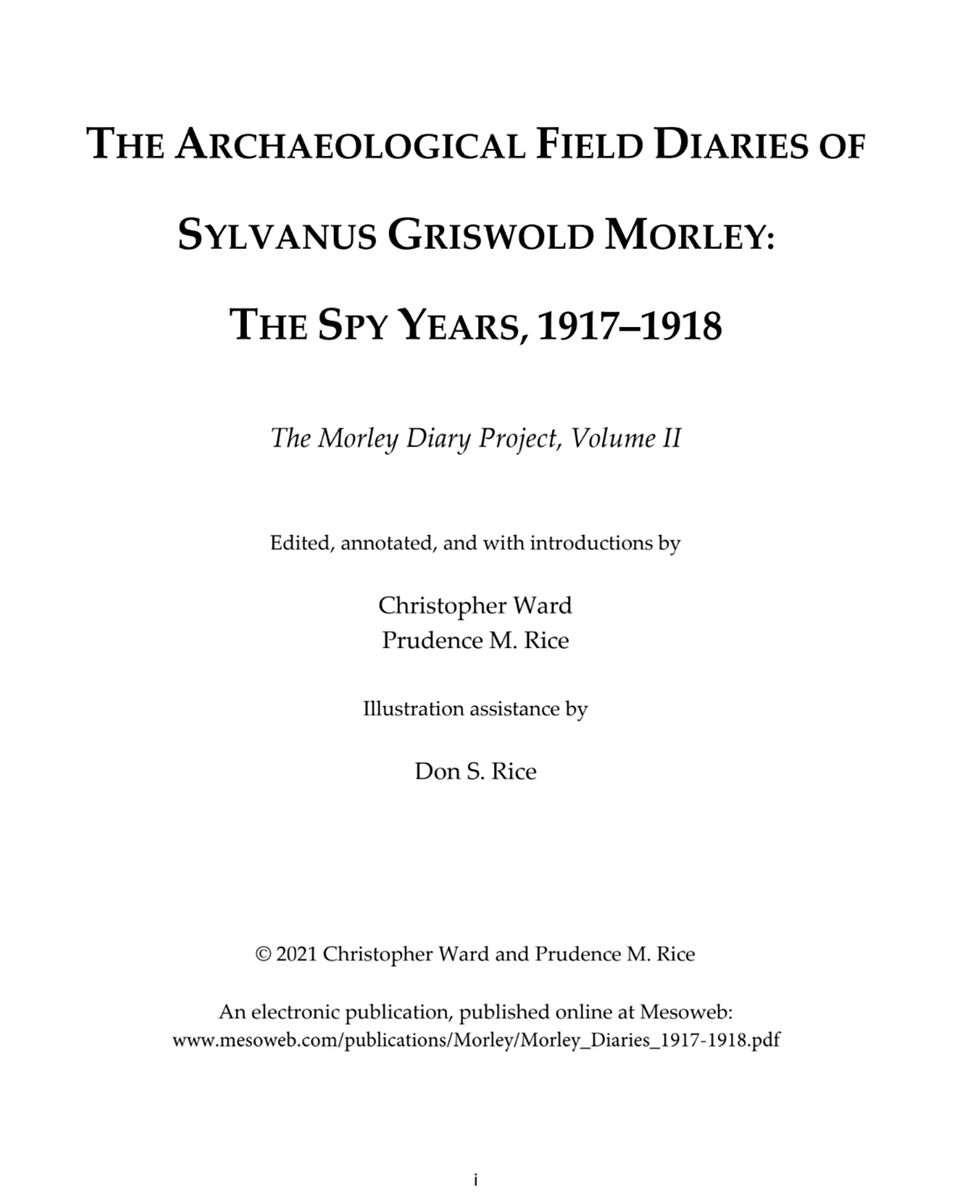
These are passages come from The Morley Diary Project, Volume II: The Archaeological Field Diaries of Sylvanus Griswold Morley, 1917–1918. The volume runs for 446 pages. They are more than travel writing, they are intelligence notes dressed as an archaeologist’s diary. Today, they give us a vivid, first-person record of the Bay Islands as they were more than a century ago: a cluster of English-speaking fishing communities, coconut groves, and deep, quiet harbors, seen through the eyes of a man who was looking for more than ruins.


Comments